Minecraft version
Back to mods 
CurseForge · Minecraft mod
Isekai API
A neutral primitive language for Minecraft worldgen — compose any worldshape (floating islands, new dimensions, layered worlds) from datapack. NeoForge 1.21.1.
Choose a version Pick your version below, then grab the matching file.
Quick answer
Which Isekai API release should I use?
Latest stable file isekai-api-2.1.0-neoforge-1.21.1
Game version 1.21.1
Loader NeoForge
Isekai API isekai-api-2.1.0-neoforge-1.21.1 targets 1.21.1 with NeoForge. The project page does not say whether this file belongs on the client, dedicated server, or both. No extra mods listed for this file.
Where it goes
Is Isekai API required on the client, server, or both?
The project page does not say whether this file belongs on the client, dedicated server, or both.
Client Source doesn’t say
Dedicated server Source doesn’t say
Loader for this release NeoForge
Required install it here Optional supported, not mandatory Not supported do not install here Source doesn’t say do not assume
The source does not explicitly classify this release as client-only or server-only.
What else does Isekai API isekai-api-2.1.0-neoforge-1.21.1 need?
isekai-api-2.1.0-neoforge-1.21.1. Change the file and its required mods may change too.
This file does not list any required mods. Do not add a library just because a different file uses it.
This file does not list any required or optional mods.
Before you install it
Add Isekai API without breaking your instance.
Built for Isekai API isekai-api-2.1.0-neoforge-1.21.1. Pick another file and the loader, install side or required mods may change.
- 01
Stick to this file
Use isekai-api-2.1.0-neoforge-1.21.1. It targets 1.21.1 with NeoForge; another release may have different loader, side or dependency requirements.
- 02
Bring the mods it needs
This file does not list any required mods. Do not add a library just because a different file uses it.
- 03
Put it on the correct side
The project page does not say whether this file belongs on the client, dedicated server, or both.
- 04
Pick the file you checked
Use the “Get this file” button beside isekai-api-2.1.0-neoforge-1.21.1. It opens that exact file at the source.
About this project
What does Isekai API add?
Isekai API is a toolbox for the shape and rules of a Minecraft world — not a world, but the machine that makes worlds. Like div/span for web pages, it's a small set of neutral, composable primitives you combine to build any world you can imagine, straight from datapack JSON. It ships no biomes, structures, or themes of its own.
A floating-island world in two files
Reference the shipped isekai_api:hooked_overworld preset from your dimension, then override one small terrain-shape hook file. No Java, and no copy of vanilla's 2500-line noise_settings — change the hook and the whole world changes shape. Runnable example: examples/1_shape/floating_island/.
What you can control
Every axis of world generation, as composable primitives:
- Terrain shape — 17 math/geometry density primitives + 5 worldshape composers (
squeeze,y_envelope,blended_noise,band_density,sloped_density). Floating islands, hanging or inverted continents, hollow shells, capped mountains, mirrored/tiled space — any 3D form on any Y band. - Biome placement — the
isekai_api:rulebiome source places biomes by pure spatial rules: vertical layers, concentric rings, regions, andand/or/notcombos (y_below 20 -> deep_dark). No climate-noise tuning. - Surface & fill — re-skin any biome's top block or stone fill from JSON.
isekai_api:vanilla_overworld_surfacehands you the whole vanilla overworld surface rule as one line, so overworld replacements skip the 30 KB copy. - New dimensions — combine the above with vanilla dimension JSON to ship a whole new dimension. Zero Java, zero vanilla edits.
- Atmosphere — per-world sky, fog, and water colors.
- Set-pieces, features & trees — build neutral content from composable parts: drop a hand-authored NBT set-piece only on flat, dry ground (
grounded_template), grow connected block clusters and fluid pools, and assemble decay-safe trees from any trunk + foliage placer. No themes baked in — you supply the blocks. - Placement control — decide exactly where features/structures go: relative to surface or fluid, by block context, Y range, slope, proximity to a block or biome, and logical combos.
- Re-place existing content — take any vanilla or modded ore, structure, mob, or feature and redistribute it into your world's new shape. A rare ore vanilla buries deep can be remapped to the underside of your floating islands. Strategies: linear, inverted, fixed-range, count-scaling, band-split, pipelines — plus exclude/add.
- Terrain-relative re-placement —
isekai_api:column_localresolves an ore's depth against each column's own surface and underside instead of one absolute Y band. Floating islands, orbiting planets and sky continents get the same internal ore layout whatever altitude they sit at. - Boot-time validation — broken or mistyped registry references are caught at server start, before they silently no-op.
- Java API —
Isekai.query()reads vanilla/modded worldgen rules;Isekai.remap()declares worldshapes in code.
Built to be built on
Isekai isn't tied to any one world or author. However you want to use it, you're welcome — datapack worldshapes, full Java mods, modpack glue, quick experiments, total conversions. MIT licensed: free to use, fork, and bundle in modpacks.
- Datapack authors: the Datapack Reference lists every key with its JSON shape; copy a runnable skeleton from
examples/— shape, placement, and adaptation each have their own folder. - Java modders: add
isekai_apias acompileOnlyGradle dependency (Cursemaven, or the repo's own maven branch — see COMPATIBILITY) and use theIsekaifacade. Everything outside theapipackage is internal, so the public surface stays small and stable. Sources and javadoc jars ship with every release. - Extend the library itself: the five dispatch interfaces — spatial predicates, remap strategies, biome zones, surface anchors, transition rules — are registry-backed extension points. Register your own variant from your own mod id and use it in JSON alongside the built-ins. No fork, no PR.
- Questions, ideas, bugs: open an issue. Built a world with Isekai? Share it — I'd love to see what people make.
MIT · Source & docs. Unrelated to the "Isekai Adventure" modpack.
Project description from CurseForge.
Pick your setup
Isekai API by Minecraft version and loader
Choose the version and loader you play, then open the matching release.
Check the dependencies, then try the file in a copied instance before changing a world you care about.
Recent files
Isekai API versions and loaders
isekai-api-2.1.0-neoforge-1.21.1
isekai-api-2.1.0-neoforge-1.21.1.jar
8 Aug 2026
Client Source doesn’t say Server Source doesn’t say Dependencies No extras listed Listed on Release listing
Check the 1.21.1 · NeoForge setup 1.21.1NeoForge release
isekai-api-2.0.0-neoforge-1.21.1
isekai-api-2.0.0-neoforge-1.21.1.jar
5 Aug 2026
Client Source doesn’t say Server Source doesn’t say Dependencies No extras listed Listed on Release listing
Check the 1.21.1 · NeoForge setup 1.21.1NeoForge release
isekai-api-1.1.0-neoforge-1.21.1
isekai-api-1.1.0-neoforge-1.21.1.jar
2 Jun 2026
Client Source doesn’t say Server Source doesn’t say Dependencies No extras listed Listed on Release listing
Check the 1.21.1 · NeoForge setup 1.21.1NeoForge release
Isekai API 1.0.0
isekai_api-1.0.0.jar
29 May 2026
Client Source doesn’t say Server Source doesn’t say Dependencies No extras listed Listed on Release listing
Check the 1.21.1 · NeoForge setup 1.21.1NeoForge release
Looking for an older file? The official CurseForge project page is in Resources.
 mod
mod CurseForge · Minecraft
Progression Reforged
Reworks Minecraft's progression by introducing copper and steel equipment, rebalancing recipes, and creating a smoother path from stone to diamond.
 mod
mod CurseForge + Modrinth · Minecraft
Create: Rock & Stone
Create: Rock & Stone aims to close the gap between Create and traditional factory game experience by bringing infinite mineable resource deposits into the world. Make your own massive drill and cash in on the bounties of nature!
 mod
mod CurseForge · Minecraft
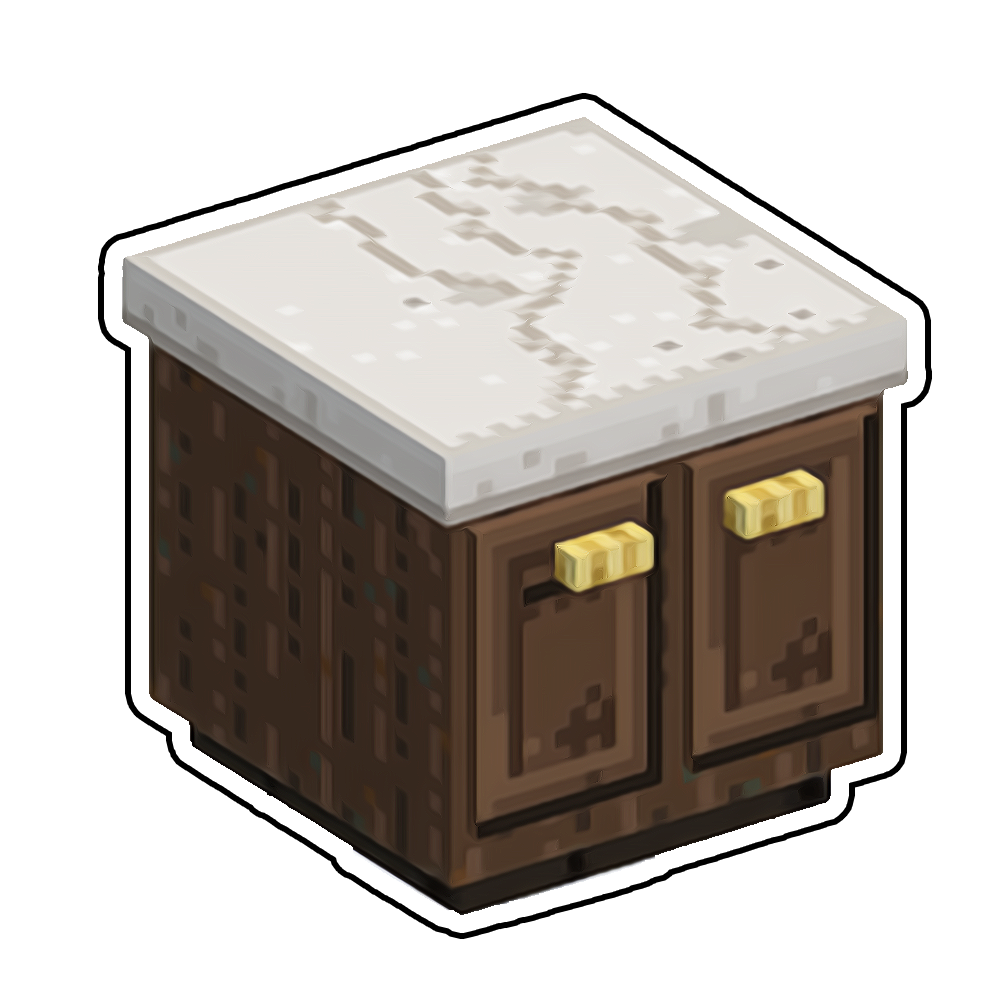
Homestyled | A Stylized Furniture Mod
This mod adds a bunch of stylized and cute functional furniture and decor to the game.