Minecraft version
Back to mods 
CurseForge · Minecraft mod
SimplePathFinder
Edit navigation layers and find path in the world.
Choose a version Pick your version below, then grab the matching file.
Quick answer
Which SimplePathFinder release matches 26.1.2 NeoForge?
Best match for your filters simple_path_finder-0.1.0-neoforge+mc26.1.2.jar
Game version 26.1.2
Loader NeoForge
SimplePathFinder simple_path_finder-0.1.0-neoforge+mc26.1.2.jar targets 26.1.2 with NeoForge. The project page does not say whether this file belongs on the client, dedicated server, or both. No extra mods listed for this file.
Where it goes
Is SimplePathFinder required on the client, server, or both?
The project page does not say whether this file belongs on the client, dedicated server, or both.
Client Source doesn’t say
Dedicated server Source doesn’t say
Loader for this release NeoForge
Required install it here Optional supported, not mandatory Not supported do not install here Source doesn’t say do not assume
The source does not explicitly classify this release as client-only or server-only.
What else does SimplePathFinder simple_path_finder-0.1.0-neoforge+mc26.1.2.jar need?
simple_path_finder-0.1.0-neoforge+mc26.1.2.jar on 26.1.2 NeoForge. Every mod below is checked against that same setup.
This file does not list any required mods. Do not add a library just because a different file uses it.
This file does not list any required or optional mods.
Before you install it
Add SimplePathFinder without breaking your instance.
Built for SimplePathFinder simple_path_finder-0.1.0-neoforge+mc26.1.2.jar on 26.1.2 NeoForge. Pick another file and the loader, install side or required mods may change.
- 01
Stick to this file
Use simple_path_finder-0.1.0-neoforge+mc26.1.2.jar. It targets 26.1.2 with NeoForge; another release may have different loader, side or dependency requirements.
- 02
Bring the mods it needs
This file does not list any required mods. Do not add a library just because a different file uses it.
- 03
Put it on the correct side
The project page does not say whether this file belongs on the client, dedicated server, or both.
- 04
Pick the file you checked
Use the “Get this file” button beside simple_path_finder-0.1.0-neoforge+mc26.1.2.jar. It opens that exact file at the source.
About this project
What does SimplePathFinder add?
Simple Path Finder
A NeoForge mod for Minecraft 26.1.2 that provides pathfinding navigation.
This mod processes the game's map data into game-independent offline navigation data. You can then use commands, items, and blocks to run pathfinding calculations on this navigation data and display the path.
Items
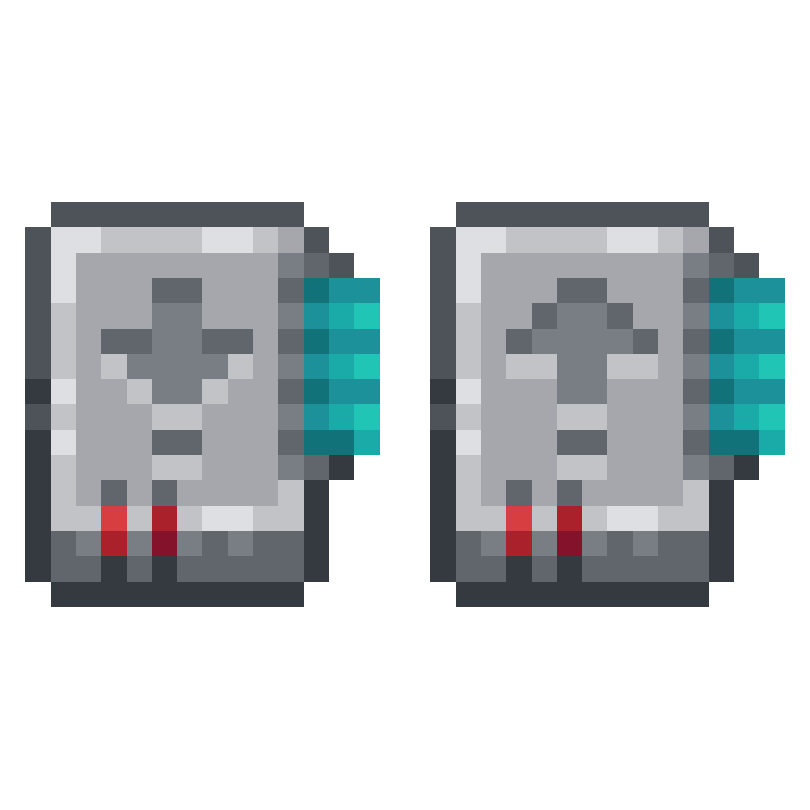
Navigation Barrier
A block that behaves like the vanilla structure void: it can be replaced by any block and does not obstruct players. When editing navigation data, its position is treated as a full, solid block. It appears as a blue navigation marker.
Navigation
The main item used to view and edit navigation data.
- While holding the Navigation item, nearby navigation data is loaded and visualized.
- The current navigation layer is displayed on blocks, with colors that follow the layer as it changes.
- Text shown between blocks indicates the weight of that edge.
- If a gap between blocks shows a red marker, that connection is impassable.
Default Mode
Primarily used to auto-generate navigation:
- Starting from a base height, the generator scans upward and downward.
- Passable spots must have at least two full blocks of clearance (i.e. a player can walk through).
- Layers are assigned based on each spot's position relative to the base height: the base height is layer
0, spots above it are numbered1, 2, 3, ...upward, and spots below are numbered-1, -2, ...downward.
Right-clicking anywhere in a chunk in this mode clears all navigation layers in that chunk, then builds navigation layers, walkability, and edge weights using the clicked block as the origin.
Other modes (switch with Shift + Scroll): Add Nav, Add Link, Remove Nav. Shift+right-click opens the settings screen.
Locator
An item that can be right-clicked on any position in the world. When used, it starts pathfinding to that position.
- Shift + right-click writes your own player data into the locator. Hand it to another player and they can navigate to your position.
Path Finder Block
Right-click the block to pathfind to its bound position.
- Right-click while holding a Locator with data: imports (writes) that data into the block.
- Right-click while holding an empty Locator: exports the block's data into the locator.
Pathfinding
Pathfinding uses the Dijkstra algorithm by default — paths are the shortest path according to edge weights.
With the default configuration, the weights are:
| Block type | Weight |
|---|---|
| Normal blocks | 10 |
| Water | 127 |
| Lava | 12737 |
If the two blocks on an edge have different weights, the larger value is used.
Weights are configurable in-game via the Block Distance Configuration screen (block IDs or tags with custom distances).
Server vs. Client Pathfinding Mode
- Server mode: the client sends a pathfinding request to the server, the server computes the path and sends the result back. Costs server CPU; requests are rate-limited.
- Client mode: the server syncs the full navigation data to the client, and all pathfinding runs locally on the client. Costs client CPU and server bandwidth.
Server mode is the default. Set serverSidePathfinding to false in the config to enable client pathfinding.
Commands
/nav <target>— start client-side pathfinding to the target position./navserver <target>— send a pathfinding request to the server for the target position (works regardless of the configured pathfinding mode)./nav clear— clear the currently displayed path (also stops pathfinding).
Project description from CurseForge.
Pick your setup
SimplePathFinder by Minecraft version and loader
Choose the version and loader you play, then open the matching release.
Check the dependencies, then try the file in a copied instance before changing a world you care about.
Recent files
SimplePathFinder versions and loaders
simple_path_finder-0.1.0-neoforge+mc26.1.2.jar
8 Sept 2026
Client Source doesn’t say Server Source doesn’t say Dependencies No extras listed Listed on Release listing
Check the 26.1.2 · NeoForge setup NeoForge26.1.2 release
Looking for an older file? The official CurseForge project page is in Resources.