Minecraft version
Back to mods 
CurseForge · Minecraft mod
Good Enough Game Integration
Good Enough Game Integration (GEGI) Browse itch and Newgrounds web games, and play them, inside Minecraft.
Choose a version Pick your version below, then grab the matching file.
Quick answer
Which Good Enough Game Integration release matches 26.2 Forge?
Best match for your filters GEGI 1.0.0 for Forge 26.2
Game version 26.2
Loader Forge
Good Enough Game Integration GEGI 1.0.0 for Forge 26.2 targets 26.2 with Forge. The project page does not say whether this file belongs on the client, dedicated server, or both. No extra mods listed for this file.
Where it goes
Is Good Enough Game Integration required on the client, server, or both?
The project page does not say whether this file belongs on the client, dedicated server, or both.
Client Source doesn’t say
Dedicated server Source doesn’t say
Loader for this release Forge
Required install it here Optional supported, not mandatory Not supported do not install here Source doesn’t say do not assume
The source does not explicitly classify this release as client-only or server-only.
What else does Good Enough Game Integration GEGI 1.0.0 for Forge 26.2 need?
GEGI 1.0.0 for Forge 26.2 on 26.2 Forge. Every mod below is checked against that same setup.
This file does not list any required mods. Do not add a library just because a different file uses it.
This file does not list any required or optional mods.
Before you install it
Add Good Enough Game Integration without breaking your instance.
Built for Good Enough Game Integration GEGI 1.0.0 for Forge 26.2 on 26.2 Forge. Pick another file and the loader, install side or required mods may change.
- 01
Stick to this file
Use GEGI 1.0.0 for Forge 26.2. It targets 26.2 with Forge; another release may have different loader, side or dependency requirements.
- 02
Bring the mods it needs
This file does not list any required mods. Do not add a library just because a different file uses it.
- 03
Put it on the correct side
The project page does not say whether this file belongs on the client, dedicated server, or both.
- 04
Pick the file you checked
Use the “Get this file” button beside GEGI 1.0.0 for Forge 26.2. It opens that exact file at the source.
About this project
What does Good Enough Game Integration add?
Good Enough Game Integration (GEGI)
Browse itch.io and Newgrounds web games, and play them, inside Minecraft.
A GEGI button in Options, or /gegi in chat, opens a menu of web games: recommended picks (Open Doctrines first), live shelves from itch.io, a search box, and a box for pasting any itch.io or Newgrounds link. Click a game and it plays right there, in Minecraft's window, keyboard and mouse included.
Minecraft 1.12.2 to 26.2 · Fabric · Quilt · NeoForge · Forge · Folia (server plugin) · MIT
Features
- The menu. Recommended, Popular, Newest, Free and Strategy tabs read from itch.io's own browse feeds, with thumbnails. A Browse sites tab links to the itch.io and Newgrounds game pages. Search filters the current tab.
- Games run in the game. GEGI carries its own Chromium: the page draws into a Minecraft screen and every key, click and scroll goes to it. Escape belongs to the game you are playing; press it twice to leave. Open in browser is always one click away.
- **Three ways in. The GEGI button at the top right of Options; typing
/gegi(or/arcade) in chat, handled on your side and never sent to the server; and the Config button in your loader's mod list (Mod Menu on Fabric and Quilt, the built-in list on NeoForge and Forge). - No dependencies. Nothing to install besides the loader. There is no Fabric API, Architectury or config library. Mod Menu support is there when Mod Menu is, and unused when it is not.
- Folia and Paper. A server has no screen, so the plugin's
/gegi(or/arcade) sends the same recommendations as clickable chat links.
Playing inside Minecraft
The first time you play, GEGI asks before downloading Chromium (about 100 MB, 300 MB unpacked: the jcefmaven natives, from Maven Central or jcefmaven's GitHub releases). Say no and games open in your own browser instead. Chromium is kept per player, not per instance, so every Minecraft version and modpack shares one copy:
| OS | Where |
|---|---|
| Windows | %LOCALAPPDATA%\Gegi |
| macOS | ~/Library/Application Support/Gegi |
| Linux | $XDG_DATA_HOME/gegi or ~/.local/share/gegi |
Delete that folder to remove it. It also holds the browser profile, so an itch.io login stays logged in.
Chromium runs in a separate process on Minecraft's own Java (gegi-browser.jar, inside the mod jar), with no window. It paints frames into shared memory, which the mod uploads as a texture; input goes back over a pipe. The process exits with the game, and a crash in a web page cannot take Minecraft down with it.
Where Chromium cannot start (Windows on ARM has no windowless Chromium build), the game screen says why, and Open in browser opens the game in your own browser.
What it connects to
itch.io/games/.../platform-web.xml, itch.io's public RSS feeds for its browse pages.img.itch.zone, for thumbnails.Maven Central or jcefmaven's GitHub releases, once, when you agree to download Chromium.
The games you play, in Chromium, like any browser.
Nothing else. No accounts, no telemetry. Only itch.io and Newgrounds links open from the menu; anything else is refused.
Newgrounds blocks automated requests to its listings, so the mod does not fetch Newgrounds lists. It links to Newgrounds' game pages, and any Newgrounds game link you paste opens.
Install
| Loader | Jar | Needs |
|---|---|---|
| Fabric | gegi-fabric-26.2-<version>.jar |
Fabric Loader 0.19.3+ |
| Quilt | the Fabric jar | Quilt Loader |
| NeoForge | gegi-neoforge-26.2-<version>.jar |
NeoForge 26.2.0.88+ |
| Forge | gegi-forge-26.2-<version>.jar |
Forge 65.1.3+ |
| Folia / Paper | gegi-folia-26.2-<version>.jar in plugins/ |
Folia or Paper 26.2 |
Every other Minecraft version has the same jars with its own version in the name. One port per minor version, on its last release:
| Minecraft | Java | Loaders |
|---|---|---|
| 26.2, 26.1.2, 1.21.11, 1.20.6 | 25 (26.x), 21 | Fabric, Quilt, NeoForge, Forge, Folia |
| 1.19.4, 1.18.2, 1.17.1, 1.16.5 | 17, 17, 16, 8 | Fabric, Quilt, Forge, Folia |
| 1.15.2, 1.14.4 | 8 | Fabric, Quilt, Forge |
| 1.13.2, 1.12.2 | 8 | Forge |
Loaders missing from a row did not exist for that Minecraft (NeoForge before 1.20.2, Fabric before 1.14), or publish no API that old (Paper's plugin API before 1.16.5).
The mod is client-side: it does nothing on a dedicated server and is not needed there.
Build
Every Minecraft version is its own Gradle build under versions/<minecraft>/, with its own Gradle, plugins and Java, because the tools for 1.12.2 and for 26.2 cannot share one build. They all compile the same core/ (Java 8, no Minecraft classes: the catalog, itch.io feeds, link allowlist, strings, the menu's model and the game's side of Chromium) and bundle the same browser/ helper.
cd versions/26.2
./gradlew build
Jars land in versions/<minecraft>/<loader>/build/libs/. The core and the helper also build on their own from the top: ./gradlew :core:test :browser:smokeTest.
A version directory is MultiLoader-Template for that Minecraft, with a Forge module and a Folia module added, and a port.json that tells CI which loaders it has. Its common/ holds only what that Minecraft's API needs: the screens draw the core's menu model, and the Options button, the command and the tick hook are mixins, which is why no loader API is needed. Forge for 1.14.4 and older ships no Mixin, so there the same three hooks are Forge events (ForgeEvents).
1.19.4 and older are one Unimined project per version instead, with the same folders. 1.13.2 and 1.12.2 have no Mojang names, so their code is written in Forge's (MCP), and 1.12.2 runs on LWJGL 2: its screens are written by hand rather than moved down from 1.14.4 by ci/port/downport.py.
CI
.github/workflows/ci.yml reads every versions/*/port.json, builds each version's loaders, then runs the real game for each:
- Fabric, NeoForge, Forge. The client starts headless with MC-Runtime-Test and joins a world (1.12.2 included).
- Versions MC-Runtime-Test has no build for (1.13 to 1.15). HeadlessMC starts the client with only GEGI installed, and the self-test creates its own world (
ci/client-selfdrive.sh). - Quilt. The same, installed with the Quilt installer (
ci/quilt-runtime.sh). - Folia. A Folia server of that version starts with the plugin and must log that it is enabled (
ci/folia-smoke.sh).
In the client jobs the mod runs its own self-test in the world (GEGI_SELFTEST=1): it types /gegi, waits for the menu to draw, opens Options, clicks the GEGI button and checks the menu opened again. Anything that does not happen fails the job.
- Chromium.
./gradlew :browser:smokeTeststarts the helper exactly as the mod does, loads a page, and checks that a click, a key press, a typed character and a resize each reach it and come back as a frame. CI runs it on Linux (Java 8 and 25), Windows and macOS.
New Minecraft versions
.github/workflows/port.yml checks every day for a Minecraft release newer than the newest versions/<minecraft>. Once its loaders are out, ci/port/port.py copies the newest port and moves it to the new game (loader versions, Java, Gradle, Loom, ModDevGradle, and everywhere the version is written down) on a branch port/<minecraft>, and the whole CI runs on it, real clients and self-test included. A green run opens a pull request; a red one opens an issue that links the failing jobs.
Releasing
.github/workflows/release.yml publishes to Modrinth and CurseForge from a tag:
git tag -a v1.0.0 -m "What changed"
git push origin v1.0.0
The tag must match version in every versions/*/gradle.properties, and its message becomes the changelog. The whole CI runs on the tagged commit first; only if it passes are its jars uploaded, one file per Minecraft version and loader (ci/release/publish.py): the mod to the mod projects, the Folia plugin to the plugin projects. The Fabric jar is also tagged Quilt. Tokens are repository secrets (MODRINTH_TOKEN, CURSEFORGE_TOKEN, BUKKIT_TOKEN) and project IDs are repository variables (MODRINTH_MOD_ID, MODRINTH_PLUGIN_ID, CURSEFORGE_MOD_ID, BUKKIT_PLUGIN_ID); a site without its ID is skipped. publish.py plan --jars <dir> shows what would be uploaded, with no token.
License
MIT. See LICENSE.
GEGI is not affiliated with itch.io, Newgrounds or Mojang.
Project description from CurseForge.
Pick your setup
Good Enough Game Integration by Minecraft version and loader
Choose the version and loader you play, then open the matching release.
Minecraft version
26.1.2
4 loader buildsMinecraft version
1.21.11
4 loader buildsForge GEGI 1.0.0 for Forge 1.21.11 1
stable file
· 1 total · 14 Sept 2026Fabric GEGI 1.0.0 for Fabric 1.21.11 1
stable file
· 1 total · 14 Sept 2026Quilt GEGI 1.0.0 for Fabric 1.21.11 1
stable file
· 1 total · 14 Sept 2026NeoForge GEGI 1.0.0 for NeoForge 1.21.11 1
stable file
· 1 total · 14 Sept 2026
Minecraft version
1.20.6
4 loader buildsMinecraft version
1.19.4
3 loader buildsMinecraft version
1.18.2
3 loader buildsMinecraft version
1.17.1
3 loader buildsMinecraft version
1.16.5
3 loader buildsMinecraft version
1.15.2
3 loader buildsMinecraft version
1.14.4
3 loader buildsMinecraft version
1.13.2
1 loader buildMinecraft version
1.12.2
1 loader buildCheck the dependencies, then try the file in a copied instance before changing a world you care about.
Recent files
Good Enough Game Integration versions and loaders
GEGI 1.0.0 for Forge 26.2
gegi-forge-26.2-1.0.0.jar
14 Sept 2026
Client Source doesn’t say Server Source doesn’t say Dependencies No extras listed Listed on Release listing
Check the 26.2 · Forge setup Forge26.2 release
Looking for an older file? The official CurseForge project page is in Resources.
 mod
CurseForge · Minecraft
stashdisk
Portable storage disks that carry their items with them, linked by a thin glowing cable network with terminals, autocrafting, buses, patterns and optional JEI support.
 mod
CurseForge · Minecraft
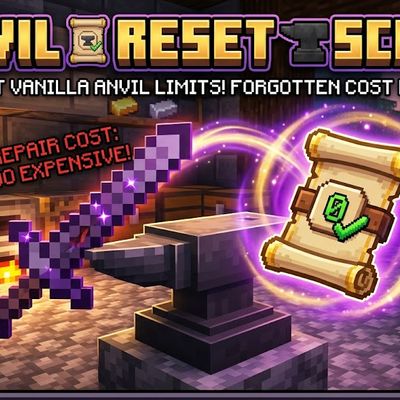
Anvil reset scroll
This mod introduces Reset Scroll. It allows you to keep your gear forever without worrying about the vanilla anvil repair limits.No Anvil Expensive,No Expensive Never Too Expensive
 mod
CurseForge · Minecraft
Camera Unbound
Immersive camera perspectives, responsive fishing and movement, cinematic respawn, and customizable crosshairs.