Dynamic Asset Generator Needed by Excavated Variants [NeoForge] v4.3.1
requiredMatching file found Matched file: Dynamic Asset Generator [NeoForge] v6.1.2
CurseForge · Minecraft mod
Automatically generated stone variants of ores
Quick answer
Excavated Variants [NeoForge] v4.3.1 targets 1.21.1 with NeoForge. The project page does not say whether it belongs on the client. The project page does not say whether it belongs on the dedicated server. All 1 required mods have matching files.
Where it goes
The project page does not say whether it belongs on the client. The project page does not say whether it belongs on the dedicated server.
The source does not explicitly classify this release as client-only or server-only.
Excavated Variants [NeoForge] v4.3.1. Change the file and its required mods may change too.
Install Dynamic Asset Generator first. We found matching files for this game-version and loader setup.
We only count dependency files that match this setup. A file for another loader does not fill the gap.
Before you install it
Built for Excavated Variants [NeoForge] v4.3.1. Pick another file and the loader, install side or required mods may change.
Use Excavated Variants [NeoForge] v4.3.1. It targets 1.21.1 with NeoForge; another release may have different loader, side or dependency requirements.
Install Dynamic Asset Generator first. We found matching files for this game-version and loader setup.
The project page does not say whether it belongs on the client. The project page does not say whether it belongs on the dedicated server.
Use the “Get this file” button beside Excavated Variants [NeoForge] v4.3.1. It opens that exact file at the source.
About this project
NeoForge version requires: Dynamic Asset Generator
Fabric/Quilt version requires: Dynamic Asset Generator and Fabric API/Quilted Fabric API
Adds automatically generated variants of ores based on various stones.
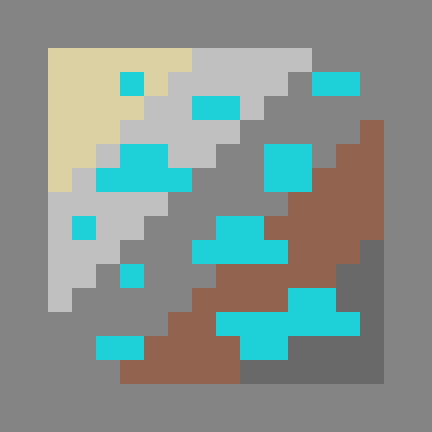
Many mods add new stones or new ores. Excavated Variants automatically adds new ores for each combination of ore and stone variant. Additionally, Excavated Variants attempts to set up world gen for these ore variants. The variants added can be changed in the config file; some mods are built in to the default configuration; others will have to be manually added. See Images tab of Curseforge page for examples of generated ores.
Running into issues? Start here!
Excavated Variants comes with default configs that include ore variants for the following mods, in addition to vanilla stones and ores:
The main config file, config/excavated_variants.json, contains several options:
All other configuration is loaded through the globalresources folder. You may add new config files there directly, but if you want to extract the built-in
configs in order to edit them, open the defaultresources.json config file. It should look something like as follows:
{
  "extract": {
    "excavated_variants": "unextracted"
  }
}
Change unextracted to extract and load the game once. Now, the default configs will be available to edit in the globalresources folder.
Note: If you just want to add more configs, you do not need to (and should not) do this. You can add new config files without extracting existing ones.
Configs define four main data types:
excavated_variants:overworld is a category shared by normal minecraft stone, deepslate, and overworld ores. excavated_variants:minecraft/iron_ore represents both normal and deepslate iron ore, as well as any other variants generated.excavated_variants:minecraft/granite represents granite, and contains information about which new variants to generate based off of granite.Except when changed by modifiers, variants are generated for all ore/stone combinations that share a ground type and do not already have a variant.
Placed in globalresources/[folder/pack]/globaldata/[namespace]/excavated_variants/ground_type. They are JSON files with the following structure:
{}.Placed in globalresources/[folder/pack]/globaldata/[namespace]/excavated_variants/ore. They are JSON files with the following structure:
types: a list of ground types that this ore can generate in. For example: ["excavated_variants:overworld"].translations: an object with locales as keys (such as en_us) and translated names of the ore as values. Translations will be prepended by the stone name, unless the translation contains %s, in which case the stone name will be inserted at that location.tags: a list of tags that variants of this ore will be added to, as both block and item tags.blocks: a map representing pairings of variants of this ore with stones. Each key is the identifier of a block representing an ore variant. Values take one of two forms:"excavated_variants:minecraft/granite". This variant will be assumed to exist if the mod who's mod ID is the namespace of the block ID is present.stone: a string representing the identifier of a stone. For example: "excavated_variants:minecraft/granite".required_mods: a list of mod IDs that must be present for this variant to be generated. For example: ["spelunkery", "create"].generating: (optional, defaults to true) whether this variant can be used as a parent for new, generated variants.Placed in globalresources/[folder/pack]/globaldata/[namespace]/excavated_variants/stone. They are JSON files with the following structure:
types: a list of ground types that this stone can generate in. For example: ["excavated_variants:overworld"].translations: an object with locales as keys (such as en_us) and translated names of the stone as values.block: the identifier of the block corresponding to this stone. For example: "minecraft:granite".ore_tags: a list of tags that ore variants for this stone will be added to, as both block and item tags.Placed in globalresources/[folder/pack]/globaldata/[namespace]/excavated_variants/modifier. They are JSON files with the following structure:
tags: (optional) a list of tags that variants matching the filter will be added to. Can be either block or item tags, in the format "namespace:[blocks/items]/path".flags: (optional) a list of flags from the following set that will be applied to matching variants:"original_without_silk": the variant should drop whatever its original block would drop, unless silk touch is used. Note that this flag is irrelevant for any ore blocks that have the behaviour of dropping "raw ore chunks" or the like, and is only relevant for when the original block drops itself."original_always": the variant should always drop whatever its original block would drop, even if silk touch is used."disable": the variant should not be generated or recognized by the mod."non_generating": the variant should not be used as a parent for new variants, but the mod is still aware of it.properties: (optional) an object with the following fields, that modifies the properties of generated blocks:destroy_time: the time it takes to break the block.explosion_resistance: the resistance of the block to explosions.xp: the amount of experience dropped by the block. Can take the same sort of integer range as seen in vanilla datapacks.filter: describes which variants this modifier applies to.Modifier filters can take the form of either a string or an object. As an object, they have at least one field, type,
which describes the type of filter. The available types are:
all matches everything.empty matches nothing.not matches everything not matched by its "filter" field.and matches everything matched by all members of its "filters" field.or matches everything matched by at least one member of its "filters" field.As a string, they take one of the following forms:
*: matches everything.~: matches nothing.~[filter]: matches everything not matched by [filter].ground_type@[namespace]:[path]: matches all variants with the given ground type.stone@[namespace]:[path]: matches all variants with the given stone.ore@[namespace]:[path]: matches all variants with the given ore.mod@[mod_id]: matches everything, but only if a mod with the given ID is present.generated: matches all variants that are generated by the mod.block@[namespace]:[path]: matches all variants with the given block ID. The namespace and path provided here can use * as a wildcard to match one or more characters.Project description from CurseForge.
Pick your setup
Choose the version and loader you play, then open the matching release.
Check the dependencies, then try the file in a copied instance before changing a world you care about.
Recent files
excavatedvariants-4.3.1-neoforge.jar
13 Aug 2024
excavatedvariants-4.3.1-fabric.jar
13 Aug 2024
excavatedvariants-4.3.0-neoforge.jar
5 Jul 2024
excavatedvariants-4.3.0-fabric.jar
5 Jul 2024
excavatedvariants-neoforge-1.20.4-4.1.6.jar
19 May 2024
excavatedvariants-fabriquilt-1.20.4-4.1.6.jar
19 May 2024
excavatedvariants-neoforge-1.20.4-4.1.5.jar
13 May 2024
excavatedvariants-fabriquilt-1.20.4-4.1.5.jar
13 May 2024
excavatedvariants-4.2.2-neoforge.jar
13 May 2024
excavatedvariants-4.2.2-fabric.jar
13 May 2024
excavatedvariants-neoforge-1.20.4-4.1.4.jar
11 May 2024
excavatedvariants-fabriquilt-1.20.4-4.1.4.jar
11 May 2024
Looking for an older file? The official CurseForge project page is in Resources.
 mod
modAdventure time inspired dungeon crawler on a train. Procedurally generated carriages on a infinite sable physics train. Rich narrative, with custom made mods for a completely unique experience.
 mod
modA simple vanilla-style mod featuring Woodcutter, Ore Excavation, Auto Tool Swap, Chest Sorting, and Auto Eat.
 mod
modUpgrades the desert biome in a vanilla friendly way!