Minecraft version
Back to mods 
Modrinth · Minecraft mod
Accessory API
Provides an Accessory API for b1.7.3 in the Babric toolchain
Choose a version Pick your version below, then grab the matching file.
Quick answer
Which Accessory API release matches b1.7.3 ornithe?
Best match for your filters 0.9.1+mcb1.7.3
Game version b1.7.3
Loader ornithe
Accessory API 0.9.1+mcb1.7.3 targets b1.7.3 with ornithe. Installation on the client is optional. Installation on the dedicated server is optional. No extra mods listed for this file.
Where it goes
Is Accessory API required on the client, server, or both?
Installation on the client is optional. Installation on the dedicated server is optional.
Client Optional
Dedicated server Optional
Loader for this release ornithe
Required install it here Optional supported, not mandatory Not supported do not install here Source doesn’t say do not assume
The source marks this as usable on both the client and server.
What else does Accessory API 0.9.1+mcb1.7.3 need?
0.9.1+mcb1.7.3 on b1.7.3 ornithe. Every mod below is checked against that same setup.
This file does not list any required mods. Do not add a library just because a different file uses it.
This file does not list any required or optional mods.
Before you install it
Add Accessory API without breaking your instance.
Built for Accessory API 0.9.1+mcb1.7.3 on b1.7.3 ornithe. Pick another file and the loader, install side or required mods may change.
- 01
Stick to this file
Use 0.9.1+mcb1.7.3. It targets b1.7.3 with ornithe; another release may have different loader, side or dependency requirements.
- 02
Bring the mods it needs
This file does not list any required mods. Do not add a library just because a different file uses it.
- 03
Put it on the correct side
Installation on the client is optional. Installation on the dedicated server is optional.
- 04
Pick the file you checked
Use the “Get this file” button beside 0.9.1+mcb1.7.3. It opens that exact file at the source.
About this project
What does Accessory API add?
Side note:
Aether for Station API utilizes this mod!
Accessory API
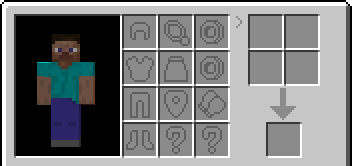
Using Babric in b1.7.3, this mod provides an API to add additional slots for various items similar to the Trinkets API and Baubles API, with styling inspired by b1.7.3's Aether.
Developer Usage
To learn about modding b1.7.3 in the babric toolchain, join The Modification Station!
It's very similar to fabric and fabric-api, but for b1.7.3.
Workspace
Add Accessory API to your build.gradle
repositories {
    maven {
        name = "Jitpack"
        url "https://jitpack.io/"
    }
}

dependencies {
    modImplementation('com.github.matthewperiut:accessory-api:0.5.1') {
        transitive false
    }
}
Recommendation
If you want to quickly see how to use this API, clone the repo (in an ide preferably) and navigate to src/test/java/com/matthewperiut/testmod.
Also view API javadocs / documentation
Implementation
Implement "Accessory" inside your item class
(with STAPI, will work with any API/mixins)
public class ExampleRing extends TemplateItemBase implements Accessory
{
    public Pendant(Identifier identifier)
    {
        super(identifier);
    }

    // To define trinket slots that your item can go into:
    @Override
    public String[] getAccessoryTypes(ItemInstance item)
    {
        return new String[]{ "ring" };
        // return new String[0]; // returns no slots
        // return new String[]{ "ring", "cape" }; // can be put in multiple types of slots
        // return new String[]{ "all" }; // can be in any accessory slot
    }

    // other methods you can use, use @Override
    // void tickWhileWorn(PlayerBase player, ItemInstance accessory)
    // void onAccessoryAdded(PlayerBase player, ItemInstance accessory)
    // void onAccessoryRemoved(PlayerBase player, ItemInstance accessory)

    // Rendering
    private YourCustomRenderer renderer;
    @Override
    public Optional<AccessoryRenderer> getRenderer()
    {
        return Optional.ofNullable(renderer);
    }
}
You can choose different types of default accessory types:
"pendant"
"cape"
"shield"
"ring"
"gloves"
"misc"
"all"
or use your own custom accessory type
Accessory Functions Explained
This is called when an accessory slot is clicked on with an item, the item is passed to the function.
This provides the slot information to see if it is compatible with it.String[] getAccessoryTypes(ItemInstance item)
This is called in the tick function of the associated player, passing the item that is being ticked on which player.void tickWhileWorn(PlayerBase player, ItemInstance item)
This is called when the inventory relating to the accessory has an item added/removed.
The function provides what player added/removed an accessory as well as the item that was added/removed.void onAccessoryAdded(PlayerBase player, ItemInstance accessory)void onAccessoryRemoved(PlayerBase player, ItemInstance accessory)
Provide rendering functions with getRenderer:public AccessoryRenderer getRenderer()
Creating Accessory Renderer
example:
public class CustomRenderer implements AccessoryRenderer {
    void renderThirdPerson(PlayerBase player, PlayerRenderer renderer, ItemInstance itemInstance, double x, double y, double z, float h, float v)
    {
        // do entity rendering magic
    }

   void renderFirstPerson(PlayerBase player, PlayerRenderer renderer, ItemInstance itemInstance)
   {
       // do entity first person rendering magic
   }
}
Similar usage as EntityRenderers
Built-in AccessoryRenderers:CapeRendererGloveRendererNecklaceRendererConfigurableRenderer
Project description from Modrinth.
Pick your setup
Accessory API by Minecraft version and loader
Choose the version and loader you play, then open the matching release.
Check the dependencies, then try the file in a copied instance before changing a world you care about.
Recent files
Accessory API versions and loaders
0.9.1+mcb1.7.3
accessoryapi-0.9.1+mcb1.7.3.jar
10 Jun 2026
Client Optional Server Optional Dependencies No extras listed Listed on Release listing
Check the b1.7.3 · ornithe setup b1.7.3ornithe release
Looking for an older file? The official Modrinth project page is in Resources.