Minecraft version
Back to mods 
CurseForge · Minecraft mod
satoyama
A cozy Vanilla+ mod about Japanese countryside life: farm rice paddies, cook 170+ dishes like sushi and ramen, build tatami-and-shoji farmhouses, and forge katana and ninja tools.
Choose a version Pick your version below, then grab the matching file.
Quick answer
Which satoyama release should I use?
Latest stable file satoyama-26.2.263-rooted.jar
Game version 26.2, 26.3
Loader Fabric
satoyama-26.2.263-rooted.jar targets 26.2, 26.3 with Fabric. The project page does not say whether this file belongs on the client, dedicated server, or both. No extra mods listed for this file.
Where it goes
Is satoyama required on the client, server, or both?
The project page does not say whether this file belongs on the client, dedicated server, or both.
Client Source doesn’t say
Dedicated server Source doesn’t say
Loader for this release Fabric
Required install it here Optional supported, not mandatory Not supported do not install here Source doesn’t say do not assume
The source does not explicitly classify this release as client-only or server-only.
What else does satoyama-26.2.263-rooted.jar need?
satoyama-26.2.263-rooted.jar. Change the file and its required mods may change too.
This file does not list any required mods. Do not add a library just because a different file uses it.
This file does not list any required or optional mods.
Before you install it
Add satoyama without breaking your instance.
Built for satoyama-26.2.263-rooted.jar. Pick another file and the loader, install side or required mods may change.
- 01
Stick to this file
Use satoyama-26.2.263-rooted.jar. It targets 26.2, 26.3 with Fabric; another release may have different loader, side or dependency requirements.
- 02
Bring the mods it needs
This file does not list any required mods. Do not add a library just because a different file uses it.
- 03
Put it on the correct side
The project page does not say whether this file belongs on the client, dedicated server, or both.
- 04
Pick the file you checked
Use the “Get this file” button beside satoyama-26.2.263-rooted.jar. It opens that exact file at the source.
About this project
What does satoyama add?
watermint satoyama
Grow a harvest. Cook a meal. Make a home.
日本語: 日本の里山の暮らしをMinecraftに持ち込むFabric向けModです。稲作や果樹の栽培、味噌・醤油・豆腐・麺づくり、寿司やラーメンなど170種類以上の料理、焼き物、畳や障子・瓦屋根の家づくり、たたら製鉄と刀・忍者道具、里山の動物や魚との出会いを楽しめます。詳しい情報は公式サイトとWikiをご覧ください。
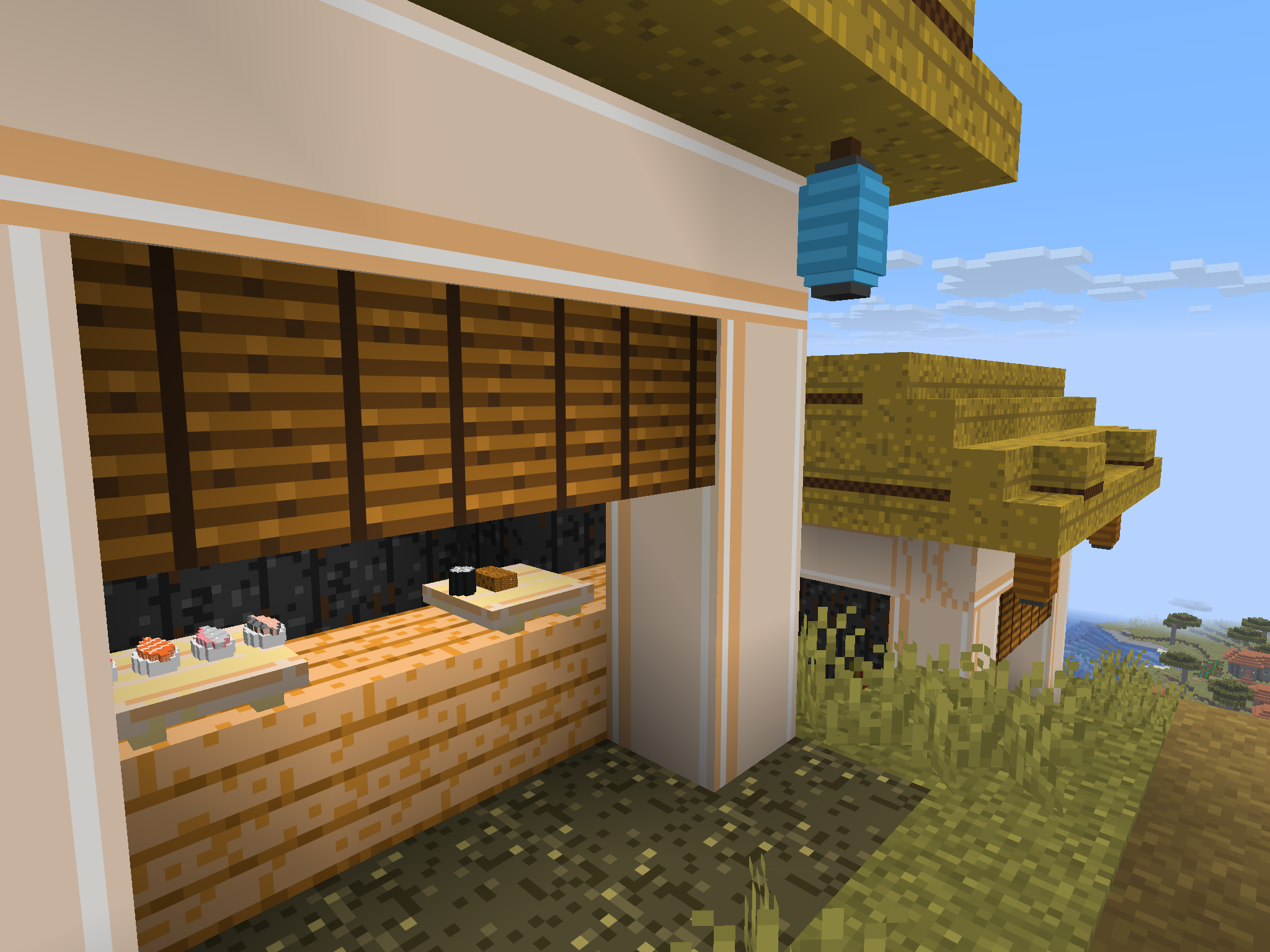
Bring the everyday pleasures of the Japanese countryside to Minecraft. Tend rice paddies and fruit trees, turn your harvest into Japanese comfort food, and build a cozy home of your own among fields, woodland, and water.
Satoyama is the landscape where people and nature live together: farmland, managed woods, and waterside habitats shaped by generations of care. That idea is at the heart of this mod—your surroundings become richer as you tend them.
At a glance
- Farming: rice paddies, more than 50 vegetables, grains, and herbs, climbing vines on stakes, nets, and trellises, and orchard trees from ume, yuzu, and persimmon to mango and lychee.
- Cooking: over 170 dishes, including sushi, onigiri, ramen, udon, soba, tempura, donburi, bento, mochi, and dango, plus regional home cooking from Hokkaido to Okinawa.
- Japanese pantry staples from scratch: miso, soy sauce, mirin, vinegar, dashi, natto, pickles, umeboshi, tofu, fresh noodles, pressed oils, and sea salt.
- Pottery: shape clay on a potter's wheel and fire it as Bizen, Shigaraki, Oribe, Karatsu, Hagi, or Yachimun ware.
- Building: kawara tile and thatched roofs, plaster and earthen walls, tatami, shoji, fusuma, irori hearths, futon, andon lamps, chochin lanterns, and bamboo fences.
- Clothing and carrying: yukata, festival happi, straw hats, a wearable back basket, and an upgradeable storage pocket, all dyeable.
- Samurai steel and ninja tools: smelt tamahagane in a tatara furnace and forge a katana or naginata, or kit yourself out as a ninja with a ninjato, shuriken throwing stars, caltrops, and a full black shinobi outfit.
- Wildlife: tanuki, sika deer, boar, squirrels, pheasants, songbirds, and seabirds, plus 13 new river and sea fish.
- Automation-friendly: cookware, workshop devices, and harvests work with hoppers and dispensers.
From field to kitchen
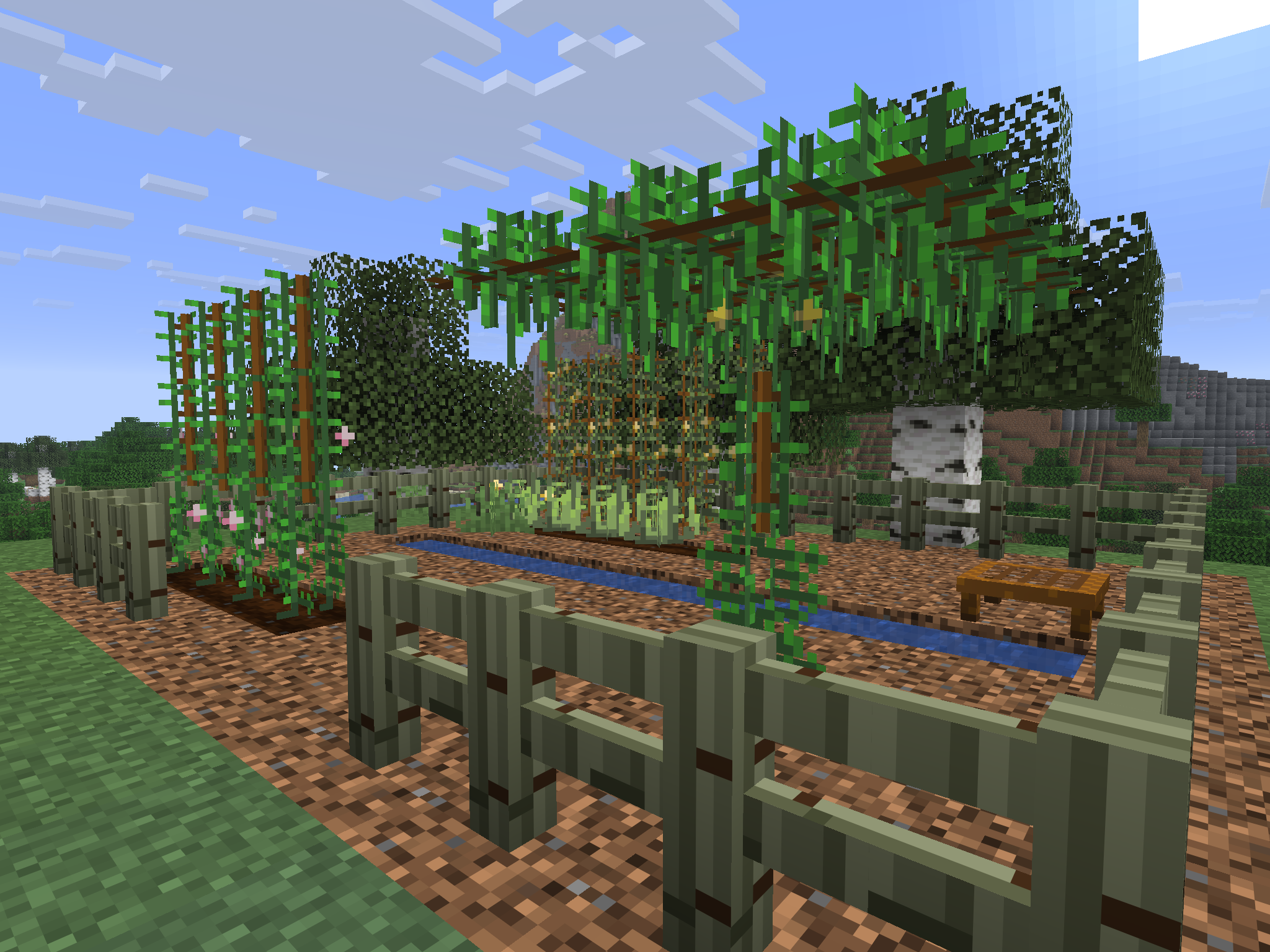
Grow rice and lotus in flooded paddies and fill your beds with daikon, eggplant, napa cabbage, soybeans, azuki, buckwheat, sesame, ginger, shiso, and many more. Some plants stay in place for repeated harvests, and leafy crops grow back after cutting.
Give your farm height. Train tomatoes, cucumbers, goya, peas, mountain grapes, passion fruit, and wisteria up bamboo stakes, nets, and trellises, or raise towering banana, papaya, and coconut plants. Improve your soil with leaf mold and andosol, and plant an orchard of ume, yuzu, mikan, persimmon, peach, chestnut, walnut, olive, and tea.
Farming feeds more than the kitchen: straw, reed, igusa rush, and cotton become thatched roofs, tatami, and cloth.
A real kitchen
Cooking grows beyond the furnace into a kitchen of tools and cookware. Slice on a cutting board with a knife, grind in a suribachi, grate daikon, mill flour on a stone ishiusu, and pound mochi with an usu and kine. Then choose your cookware: pots and pans in three sizes, a wooden steamer, a deep fryer, a grill net, and a skewer grill, all heated by a campfire or a kamado stove.
Start with a fried egg, grilled salmon, and a pot of rice. Work your way up to miso soup, karaage, chawanmushi, nikujaga, oyakodon, gyudon, okonomiyaki, yakitori, nigiri sushi, tempura, and four kinds of ramen. Discover regional dishes from across Japan, such as Okinawan goya champuru, Kagawa's sippoku udon, Fukui's oroshi soba, and Kumamoto's karashi renkon.
The Kitchen guide · All Dishes
Made from scratch
Stock your pantry the traditional way.
- Fermentation and drying: grow rice koji, then let time turn soybeans into miso, soy sauce, and natto. Keep a nukadoko for pickles, salt your own umeboshi, and hang fish, persimmons, and daikon on a drying rack under the open sky.
- Tofu and salt: soak, mill, boil, and press soybeans into soy milk, then set it as yose, momen, silken, or Okinawan shima tofu. Leach brine from beach sand and boil it down for salt and the nigari that sets your tofu, or mine rock salt in the mountains.
- Noodles: knead dough, roll it into sheets, and cut, extrude, or stretch it into udon, soba, somen, ramen noodles, and rice vermicelli.
- Oils, stocks, and drinks: press rapeseed, sesame, egoma, and olive oil, shave katsuobushi for dashi, and bottle fruit juices from your orchard.
Fermentation and Drying · Tofu and Salt Making · Noodle Making
Pottery and the table
Shape clay on the potter's wheel into platters, small plates, and bowls. The glazes and pigments you add in the kiln decide the finish: Bizen, Shigaraki, Oribe, Karatsu, Hagi, or Okinawan Yachimun ware.
Then set the table. Serve ramen or a rice bowl in a bowl you fired yourself and eat it right where it stands. Arrange side dishes on a platter, sushi on a sushi geta, or a balanced meal of one soup, one main, and two sides on a tray. Open a market stall with produce crates and iced displays of fresh fish.
A home in the countryside
Build a Japanese farmhouse from the ground up. Roof it with straw or reed thatch, or with fired kawara tiles in three regional colors: silver Awaji, near-black Sanshu, and red-brown Sekishu. Raise walls of white shikkui plaster, earthen daub, namako tilework, or charred yakisugi cedar, framed with squared hinoki posts. Blocks weather over time, and thatch gathers moss.
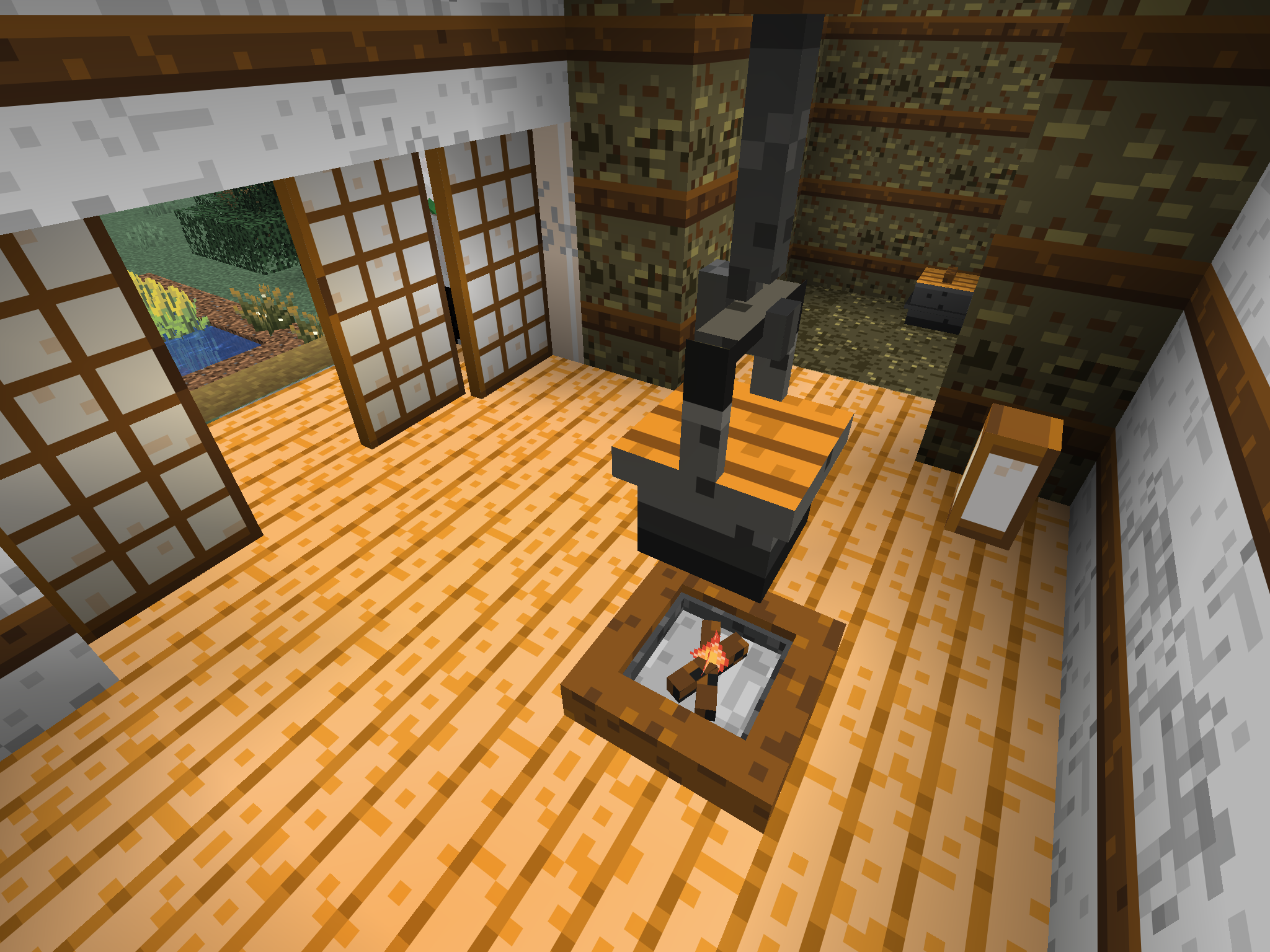
Inside, lay tatami and a rammed-earth doma floor, slide open shoji, fusuma, lattice doors, and storm shutters, and hang sudare against the summer sun. Furnish with futon, a chabudai, andon lamps, and chochin lanterns in all 16 dye colors. Hang a pot from a jizaikagi over the irori hearth, and building and cooking come together in one room.
Farmhouses and Interiors guide
Clothing and carrying
Spin cotton and weave cloth for yukata, happi, and hachimaki, then dye them for everyday wear or a summer festival. Put on a straw hat, reinforced in tiers from copper to netherite, and carry your harvest in a bamboo back basket worn like a backpack. The isekai pocket is portable storage that upgrades in stages, keeps its contents through every upgrade, and opens with a single key.
Katana, naginata, and ninja tools
Make Japanese steel the old way. Wash iron sand out of riverbeds in a sluice, smelt it over charcoal in a clay tatara furnace, and work the tamahagane into a blade. The katana is quick to swing but does not sweep. The naginata gives up speed for longer reach and a sweeping cut.
Then there is the ninja's kit. Shinobi gear is made for getting away, not for winning a brawl:
- Ninjato: the short, straight ninja sword. It has the quickest swing of the three blades, and it helps you over a wall.
- Shuriken: throwing stars you can let fly without drawing a weapon. They are better at stopping a pursuer than finishing one.
- Caltrops (makibishi): scatter them behind you to sting and slow whatever is chasing you.
- Black shinobi outfit: hood, jacket, hakama, and tabi for moving lightly.
Every blade has a trade-off rather than a bigger number, so combat stays within vanilla conventions.
Tatara and Smithing · Shinobi Tools and Clothing
Beyond your doorstep
The landscape is alive. Meet tanuki, sika deer, boar, weasels, and squirrels in the woods, and watch sparrows, white-eyes, wagtails, and round little shima enaga flock through the trees. Cormorants dive in the rivers, while gulls and boobies plunge along the coast. Offer an onigiri to a tanuki or hold out an acorn to bring a squirrel closer.
Rivers and seas hold ayu, iwana, koi, tai, saba, buri, katsuo, maguro, and more, ready to become salt-grilled skewers, sashimi, or nigiri. Wild rice grows in swamps and wild soybeans in sunflower plains. The Finding Plants and Wildlife guide shows which biomes to visit.
Land Animals and Birds · Aquatic Life · Finding Plants and Wildlife
Built for automation
Cookware and workshop devices pull in a matching batch, cook it, and start the next one on their own. Feed and empty them with hoppers, let dispensers work the cutting board, and harvest some crops with dispensers holding sickles or shears. The washing sluice and tatara furnace connect the same way, so a farm, a kitchen, or an ironworks can run itself.
Made to feel at home in Minecraft
Satoyama follows a Vanilla+ approach, adding choices for farming, cooking, building, and daily life while keeping combat within vanilla conventions. Existing vanilla ingredients are reused wherever they represent the same food, so familiar crops remain part of your kitchen.
Installation and compatibility
satoyama runs on Fabric for Minecraft: Java Edition, and Fabric API is required. For multiplayer, install it on both the client and the server.
Supported Minecraft versions, required Fabric Loader and Fabric API versions, JEI integration, and step-by-step setup are all covered on the Installation page.
Guides and project information
Visit the official website and browse the Wiki for farming, cooking, crafting, building, and exploration guides.
Distributed under the watermint satoyama EULA.
Project description from CurseForge.
Pick your setup
satoyama by Minecraft version and loader
Choose the version and loader you play, then open the matching release.
Minecraft version
26.2
1 loader buildCheck the dependencies, then try the file in a copied instance before changing a world you care about.
Recent files
satoyama versions and loaders
satoyama-26.2.263-rooted.jar
21 Sept 2026
Client Source doesn’t say Server Source doesn’t say Dependencies No extras listed Listed on Release listing
Check the 26.3 · Fabric setup Fabric26.226.3 release
Looking for an older file? The official CurseForge project page is in Resources.
 mod
CurseForge + Modrinth · Minecraft
Modern Morph
A modern port of iChun's iconic Morph mod
 mod
CurseForge · Minecraft
TheElementGuy's More Metals and Ores
More ores! More materials! Vanilla-like! Updated for 26.3 (and Fabric)!
 mod
CurseForge · Minecraft
Best in Pack
Which food, armor, weapon, tool and fuel is the best in your modpack? Press B to see every item from every mod ranked by its real stats.