Vintage Story version
Back to mods 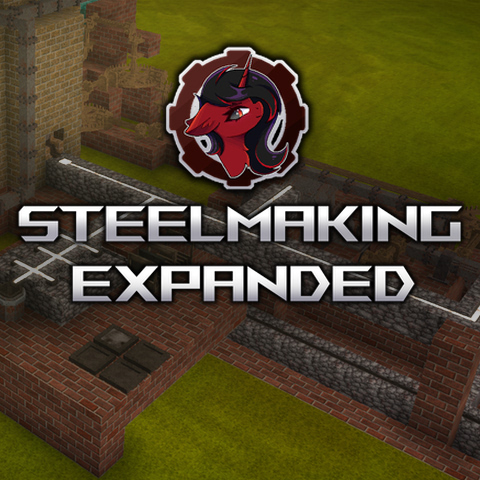
Vintage Story Mod DB · Vintage Story mod
Steelmaking Expanded
An industrial-era iron and steel production chain for Vintage Story, built as a set of multiblock structures and network blocks. It adds horizontal progression past the vanilla cementation furnace: you smelt iron in bulk in a blast furnace (Stage I), then refi
Choose a version Pick your version below, then grab the matching file.
Quick answer
Which Steelmaking Expanded release matches 1.22.3?
Best match for your filters 0.9.4
Game version 1.22.0, 1.22.1, 1.22.2
Loader Built-in Vintage Story mod system
Steelmaking Expanded 0.9.4 targets 1.22.0, 1.22.1, 1.22.2. It must be installed on the client. Installation on the dedicated server is optional. No extra mods listed for this file.
Where it goes
Is Steelmaking Expanded required on the client, server, or both?
It must be installed on the client. Installation on the dedicated server is optional.
Client Required
Dedicated server Optional
Loader for this release Built-in Vintage Story mod system
Required install it here Optional supported, not mandatory Not supported do not install here Source doesn’t say do not assume
This release supports both sides, but the source does not require it on the server.
What else does Steelmaking Expanded 0.9.4 need?
0.9.4 on 1.22.3. Every mod below is checked against that same setup.
This file does not list any required mods. Do not add a library just because a different file uses it.
This file does not list any required or optional mods.
Before you install it
Add Steelmaking Expanded without breaking your instance.
Built for Steelmaking Expanded 0.9.4 on 1.22.3. Pick another file and the loader, install side or required mods may change.
- 01
Stick to this file
Use 0.9.4. It targets 1.22.0, 1.22.1, 1.22.2; another release may have different loader, side or dependency requirements.
- 02
Bring the mods it needs
This file does not list any required mods. Do not add a library just because a different file uses it.
- 03
Put it on the correct side
It must be installed on the client. Installation on the dedicated server is optional.
- 04
Pick the file you checked
Use the “Get this file” button beside 0.9.4. It opens that exact file at the source.
About this project
What does Steelmaking Expanded add?
An industrial-era iron and steel production chain for Vintage Story, built as a set of multiblock structures and network blocks. It adds horizontal progression past the vanilla cementation furnace: you smelt iron in bulk in a blast furnace (Stage I), then refine it into steel in a Bessemer converter (Stage II). Gas pipes move air, blast and exhaust between the machines, and molten canals plumb the liquid metal to molds and bulk storage.
Compatibility
- Game version: built for Vintage Story 1.22. Legacy 1.20 and 1.21 builds are on the GitHub releases page.
- Multiplayer: works in singleplayer and on dedicated servers.
- Requires: Expanded Library (exlib) and Pipes and Power Expanded (ppex). Install both before updating.
- Languages: English, Russian, Ukrainian.
- Save safety: safe to add to an existing world. Removing it leaves the placed machine blocks behind, so break them first if you uninstall. Updating from before 0.9.0 runs block migrations automatically; replace any leftover unknown blocks in creative.
Quick start
The iron line, in order. Each step has a full handbook article ("Steelmaking:") in game.
- Build the blast furnace: place the door block, hold Ctrl + right-click for the build outline, and fill in every highlighted block until it reports complete.
- Set up steam power (see Pipes and Power Expanded), then an Air Blower sub-machine, a pair of Cowper Stoves and a Smoke Stack. Pipe air through the blower and a cowper into the tuyeres, and pipe furnace exhaust through the cowpers out to the smoke stack.
- Load the Reinforced Hopper with crushed iron ore, crushed coke and lime. The Bell Hopper below fills the shaft on its own (dropping is on by default).
- Ignite the blast mix with a torch and close the door.
- Charge one cowper stove on exhaust while the other blows hot blast in, swapping them with valves as they cool. Hold the furnace above about 1482 degrees Celsius and it begins to melt iron.
- Open the Molten Metal Taps to drain iron and slag down canals into molds or barrels.
- For steel, pour molten iron into a Bessemer converter and refine it - that is Stage II.
Commands and config
.exmod network hi/unhi- highlights every networked block, a separate colour per network, so you can see where a run is continuous and where it is broken..exmod measure metric/imperial- switches display units on machines and network blocks. Display only; the simulation is unchanged./exmod molds <plate|ingot|rod|all> <on|off>- enables or disables this mod's tool molds (admin)./exmod config smex- view or change any gameplay value live, applied immediately with no world reload (admin)./exmod recipes smex <normal|cheap>- switch the crafting and construction cost level; applies on the next world reload (admin).
Two config files are generated under VintagestoryData/ModConfig/ on first run:
smex_values.json- the gameplay tunables (melt temperatures and timings, how much blast mix a charge needs, canal and barrel cooldown rates, salvage drop ratios). Editable live with/exmod config smex.smex_recipes.json- the per-recipe and per-construction cost numbers for each level (normal and cheap). Pick the active level with/exmod recipes smexand fine-tune the numbers in this file; changes apply on the next world reload.
How it works
Stage I - the blast furnace and hot blast (click to expand)

The blast furnace is a tall multiblock built mostly from refractory bricks, with its own door, two tuyeres (hot-blast intakes) low on the shaft, two gas outlets (exhaust) high up, two hoppers on top, and two molten metal taps (the upper pours slag, the lower pours iron). Place the door first - it is the control block - then Ctrl + right-click for the build outline and fill it in.
The furnace does not consume ore directly; it burns blast mix (ore, fuel and flux). Load the ingredients into the reinforced hopper and the bell hopper drips blast mix down the shaft. Ignite it with a torch and close the door. While firing the temperature climbs to about 1400 degrees Celsius on its own - not enough to smelt iron - so you feed it hot blast through the tuyeres to push past iron's melting point (about 1482 degrees Celsius) and into the melting phase, where it turns the blast mix into a reservoir of molten iron and slag.
The furnace is temperamental: opening the door, running out of blast mix, a choked exhaust, or an overflowing reservoir all put the fire out and solidify everything inside into blocks you must clear before firing again. You cannot open the door while it fires, so keep it fed through the hoppers for continuous melting.
The hoppers:
- Reinforced hopper - holds crushed iron ore, crushed coke and lime, and combines 12 crushed iron, 3 crushed coke and 1 lime into 16 blast mix at a time, stockpiling it internally. It also accepts reclaimed blast mix.
- Bell hopper - sits below and deploys blast mix into the shaft, stopping on its own when the furnace is full. Dropping is on by default; toggle it with Ctrl + right-click.
Coke is baked from coal in a vanilla coke oven, and ore and coke are crushed in a vanilla pulverizer. The furnace needs a lot of both, so prepare ahead.

The cowper stove is a multiblock heat regenerator that makes hot blast. Pipe the furnace's exhaust into its intake and the flowing gas charges the stove's internal heat sinks; then route plain pressurised air (blast, above 2.5 atm) through the charged stove and it comes out scorching, hot enough to lift the furnace's ceiling to about 1700 degrees Celsius. Run two stoves as a pair: while one charges on exhaust, the other discharges hot blast, and you swap their roles with valves as the discharging one cools. Keep exhaust and blast on separate paths - if they mix inside a stove it cannot heat up.
Blast itself is made by an Air Blower, a steam-engine sub-machine (it sits in the engine's drive cell like the fluid pump or MP generator), so it runs on steam rather than an axle. Its output pressure is capped by the engine's inlet steam pressure, so feed the engine enough steam to reach the 2.5 atm the stove needs. Burning a coal pile in the open slot under the stove's intake speeds charging (anthracite is fastest); other fuels make the stove emit some exhaust of its own.
Finally, the smoke stack is a multiblock that vents surplus exhaust to the sky so the line does not back up and choke the furnace. Because it tries to consume all the gas in its network, use directional pressure valves to route exhaust to the cowper stoves first and only the overflow to the stack.
Stage II - the Bessemer converter (click to expand)

The converter takes molten iron and blows blast through it to burn off carbon and turn it into steel. It is the most demanding machine in the mod: it costs a lot of materials, needs both mechanical power and a blast supply, and only works as the final stage of an already-running molten line.
Place the control block, then right-click it with 1 large gear and 8 iron or steel rods in your hotbar to start the build (it spawns the converter vessel), and build it up through its stages. You also place a gas intake, a transmission, an input tap and an output canal start block. The gas intake and the transmission must face the same way as the control block, or they will not couple.
Connect mechanical power to the transmission with an axle (it needs high torque, so a steam engine suits it), pipe blast into the gas intake from an air blower, and run a molten canal carrying iron into the input tap with a second canal beneath to carry steel out.
To run it: set it to Filling and pour in molten iron, switch to Normal and it refines the charge at about 1800 degrees Celsius for roughly five minutes, then set it to Pouring to drain the steel into the output canal. The conversion is exothermic, so the charge holds its heat while it works - but pour it out in time or it solidifies. If it does solidify, break the converter with a steel pickaxe to recover the metal, or chisel out a small residue from the upper hatch once it hardens.
The molten network and casting (click to expand)

Liquid metal is poured through canals, not carried by pipes. Lay a Molten Canal (Start) as the anchor of a network, then run straights, bends and junctions out from it.
- Molten Metal Taps - drain the furnace (the lower pours iron, the upper pours slag), each into the start of a canal below.
- Canal Tap - pours metal out of the network into a barrel, a large mold, or the converter.
- Mold Pedestal - holds a fired mold and fills it from the network. The mod also adds larger plate, quad rod and double ingot molds, clay-formed and fired like any tool mold.
- Molten Barrel - bulk storage for molten metal; buffer excess iron or hold slag from the upper tap.
Mind the temperature: metal in the canals cools, and if it drops too far it solidifies in place. A hardened canal stops flowing - once it has cooled enough, chisel it out with a chisel and hammer to recover most of the metal as bits, which crush back into crushed iron. Keep runs short, keep them fed, and empty them before they go cold.
You can seal an empty straight canal with 4 fire clay to use it as a manual valve; it caps over and severs the network there, handy for isolating a section. A chisel breaks the seal and recovers 2 fire clay. A freshly filled mold is dangerously hot - holding one bare-handed burns you (wear heavy leather or a blacksmith's gloves), and a still-molten mold spills if you stash or rack it before it sets.
Byproducts and vanilla overrides (click to expand)
Smelting leaves byproducts, none of them wasted:
- Slag - grinds into powdered slag, which makes mortar when mixed with slaked lime in a barrel, or acts as a phosphate fertilizer on farmland.
- Loose blast mix - behaves like a coal pile, so you can lay it back down, stack it, feed it through the hoppers, or burn it as ordinary fuel in a pinch.
- Solidified metal - chisels out of canals and barrels as bits. Per vanilla, recovering hardened metal from a ceramic mold shatters the mold.
The mod also swaps a few vanilla classes for drop-in replacements (Harmony patches) so the molten line works. None of this changes vanilla recipes or balance - it only adds the plumbing the new machines need: filled tool molds can be carried and racked while still holding metal (a molten one spills if racked before it sets), the mold rack enforces that, coal piles gain blast-mix burn-to-slag behaviour, and the larger plate, double-ingot and quad-rod mold variants are added.
Workable setups
The build is vertical and spread out, so it helps to see it laid out. These diagrams show the full chain, now including steam power.
Warning! Scary diagrams!
Starter iron setup:

Starter steel setup:

Advanced steel setup:

FAQ
- My furnace is stuck around 1400 degrees Celsius. It needs hot blast. Charge a cowper stove on exhaust, then route pressurised air through it into the tuyeres.
- My furnace keeps going out. Do not open the door while it fires. Keep blast mix fed, keep the exhaust flowing through the smoke stack, and do not let the molten reservoir overflow.
- My cowper stove will not heat, or exhaust comes out the air line. Exhaust and blast mixed inside the stove - keep them on separate paths. Burning anything but anthracite also emits some exhaust.
- My metal solidified in a canal, mold or converter. It cooled. Chisel canals, barrels and converter residue out, or break the converter with a steel pickaxe to recover. Keep runs short and fed - sleeping cools everything, it does not fast-forward the process.
- A machine became an inert block I cannot interact with or break. Its block entity was lost (a load error or desync). It is recreated on reload, or an admin can run
/exmod heal. - I see unknown blocks after updating. Save migrations run on load; replace any that slipped through in creative.
Further reading
The mod loosely models the 19th-century steelmaking process. If you want to read more:
- https://en.wikipedia.org/wiki/Blast_furnace
- https://en.wikipedia.org/wiki/Hot_blast
- https://en.wikipedia.org/wiki/Regenerative_heat_exchanger
- https://en.wikipedia.org/wiki/Bessemer_process
- https://en.wikipedia.org/wiki/History_of_the_steel_industry_(1850-1970)
Notes
- Point at any machine to read its live status in the block-info overlay (charge, temperature, what it is waiting on). The cowper stove shows its temperature on the heat sinks, so open the hatch to look at them.
- One smoke stack handles the exhaust from one blast furnace. Build more furnaces or add other gas sources and you may need more stacks.
- The whole build is vertical, so leave headroom - the furnace is tall, molten metal only flows down, and the converter extends the structure downward, so you will likely dig a pit.
- I test this through development and on my own server, but you may still find new issues. Please report them, and balance suggestions are welcome in the comments.
Showcase
An excellent foundry build by Soria, showing how you can dress up the blast furnace and converter from this mod:


Links and credits
- Future plans: roadmap diagram
- Source and releases: github.com/ringavirda/modding-vsexpanded
- Contact: discord fallenstar1975
- Logo art: ariburin
Video walkthroughs (pre steam power - blast furnace reference)
Project description from Vintage Story Mod DB.
Pick your setup
Steelmaking Expanded releases for each Vintage Story version.
Choose the version and loader you play, then open the matching release.
Vintage Story version
1.22.2
1 loader buildVintage Story version
1.22.1
1 loader buildVintage Story version
1.22.0
1 loader buildCheck the dependencies, then try the file in a copied instance before changing a world you care about.
Recent files
Steelmaking Expanded versions and loaders
0.9.4
smex_0.9.4.zip
21 Jun 2026
Client Required Server Optional Dependencies No extras listed Listed on Release listing
Check the 1.22.3 setup 1.22.01.22.11.22.21.22.3 release
0.9.3
smex_0.9.3.zip
20 Jun 2026
Client Source doesn’t say Server Source doesn’t say Dependencies No extras listed Listed on Release listing
Check the 1.22.3 setup 1.22.01.22.11.22.21.22.3 release
0.9.2
smex_0.9.2.zip
16 Jun 2026
Client Source doesn’t say Server Source doesn’t say Dependencies No extras listed Listed on Release listing
Check the 1.22.3 setup 1.22.01.22.11.22.21.22.3 release
0.9.1
smex_0.9.1.zip
13 Jun 2026
Client Source doesn’t say Server Source doesn’t say Dependencies No extras listed Listed on Release listing
Check the 1.22.3 setup 1.22.01.22.11.22.21.22.3 release
0.9.0
smex_0.9.0.zip
13 Jun 2026
Client Source doesn’t say Server Source doesn’t say Dependencies No extras listed Listed on Release listing
Check the 1.22.3 setup 1.22.01.22.11.22.21.22.3 release
0.8.7
smex_0.8.7.zip
8 Jun 2026
Client Source doesn’t say Server Source doesn’t say Dependencies No extras listed Listed on Release listing
Check the 1.22.3 setup 1.22.01.22.11.22.21.22.3 release
0.8.6
smex_0.8.6.zip
4 Jun 2026
Client Source doesn’t say Server Source doesn’t say Dependencies No extras listed Listed on Release listing
Check the 1.22.3 setup 1.22.01.22.11.22.21.22.3 release
0.8.5
smex_0.8.5.zip
4 Jun 2026
Client Source doesn’t say Server Source doesn’t say Dependencies No extras listed Listed on Release listing
Check the 1.22.3 setup 1.22.01.22.11.22.21.22.3 release
0.8.4
smex_0.8.4.zip
3 Jun 2026
Client Source doesn’t say Server Source doesn’t say Dependencies No extras listed Listed on Release listing
Check the 1.22.3 setup 1.22.01.22.11.22.21.22.3 release
0.8.3
smex_0.8.3.zip
3 Jun 2026
Client Source doesn’t say Server Source doesn’t say Dependencies No extras listed Listed on Release listing
Check the 1.22.3 setup 1.22.01.22.11.22.21.22.3 release
0.8.2
smex_0.8.2.zip
2 Jun 2026
Client Source doesn’t say Server Source doesn’t say Dependencies No extras listed Listed on Release listing
Check the 1.22.3 setup 1.22.01.22.11.22.21.22.3 release
0.8.1
smex_0.8.1.zip
2 Jun 2026
Client Source doesn’t say Server Source doesn’t say Dependencies No extras listed Listed on Release listing
Check the 1.22.3 setup 1.22.01.22.11.22.21.22.3 release
Looking for an older file? The official Vintage Story Mod DB project page is in Resources.
 mod
mod Vintage Story
VS Instruments Redux
Bring your world to life! Play custom ABC sheet music files on working in-game instruments.
 mod
mod Vintage Story
Chisel Leaf
Adds craftable leaf blocks you can chisel
 mod
mod Vintage Story
Lunchbox
Adds storage containers which automatically feeds the player when hungry